
By John Martin, CPFA Chair
Over the past several months, CPFA has worked to identify a legislative author for a proposal aimed at strengthening seniority protections for part-time faculty in California’s community colleges. While we were not able to secure an author during this stage of the current legislative cycle, many legislative offices expressed interest in revisiting the proposal when the new two-year cycle begins next fall. We understand the constraints legislators face, including the 35-bill limit per cycle.
We also recognize that the Legislature recently took a step forward with AB 1028 (Fong) in 2025, in which districts are to follow local union chapter CBAs for any termination process. That progress matters. Today, AB 1171 (Patel), addressing healthcare access for PT faculty, is currently before the Senate. These efforts demonstrate the Legislature’s ongoing commitment to improving conditions for the part-time educators who are essential to the success of the CCC.
Our proposal builds on that progress in a practical and fiscally responsible way. It is a no-cost measure that simply clarifies and strengthens existing language in the Education Code. Currently, seniority practices vary widely among the 72 districts in the CCC system. The result is that many instructors serve students semester after semester without receiving credit toward seniority, while districts continue hiring new instructors without a consistent framework for recognizing those already contributing to the institution. This lack of clarity can undermine stability for faculty and departments alike.
Our proposal straightforwardly addresses this issue by clearly defining seniority as the first date of hire and ensuring that PT faculty are placed on a seniority list once they receive their first evaluation—or automatically if an evaluation is not conducted within the expected timeframe. This approach promotes fairness while also encouraging districts to follow existing evaluation requirements.
We also sought to address a practical issue related to course assignments. Many districts limit part-time faculty to teaching only the specific course they were initially hired to teach, even when they are qualified to teach other courses within the same discipline. Our proposal clarifies that qualified faculty should be eligible for assignments consistent with their expertise and education.
Across the state, negotiations over rehire rights and seniority have been uneven, and in some cases, limited progress has been made at the local level. Establishing clearer statewide guidance would help ensure that “local control” operates within a framework that is consistent, transparent, and equitable.
CPFA looks forward to continuing this conversation with legislative offices and hopes to work with an author in the upcoming legislative cycle.
Other Note: CPFA elections are approaching, and several seats remain vacant. I strongly encourage you to consider running for a position.
As many of you know, I will not be seeking reelection as Chair when my term ends in May 2027. This makes the upcoming election cycle especially important for building leadership continuity within CPFA.
Serving on the Executive Council is an excellent way to gain valuable insight into how CPFA operates and helps prepare you to take on a larger leadership role.
Please give this serious consideration. CPFA’s strength depends on members stepping forward to lead.
Final Note: Our Annual CPFA Conference was held on Saturday, May 16, 2026. Be sure to look at our website for more information and/or contact me at jmartin@cpfa.org.
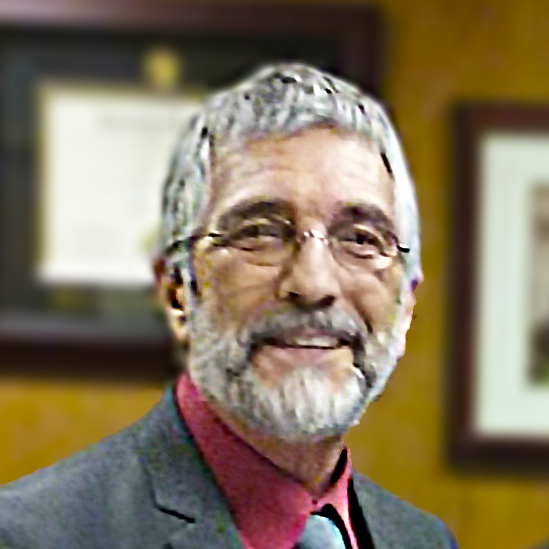
About the Author
John has been teaching US History at Butte and Shasta Colleges for over thirty years. He is currently Chair of CPFA’s Executive Committee, and has been serving on the committee for over a decade.
There can be good seniority systems and some that are not so good.
City College of San Francisco (CCSF) has a seniority system for part-time faculty. When there are layoffs, those with less seniority within a department lose their jobs before those with greater seniority do.
However, as soon as a person is hired full-time, even if the person has not taught a single day at CCSF, that person immediately has more seniority than all part-time faculty and gains the privileges that come with greater seniority. The privileges include choosing their class schedule priorities that may result in displacing the times that part-time faculty have taught for years leaving the part-timer with less desirable times or times they can’t work.
Many colleges have a practice of making summer classes available to part-timers. At CCSF, full-timers have first refusal rights and often teach the scheduled summer classes.
A part-timer may have, what is rare, office space. If it is desirable, the new full-timer can take it over forcing the part-timer to move out.
Additionally, full-time faculty members who do not attract enough students to a class resulting in it being cancelled can take over a class of a part-timer. Many won’t exercise their bump rights and will opt to teach an extra class the next term to make up for the cancelled class.